 Scenic places
Hunza Valley: a first-timer's guide
TourScope team · 7 November 2026 · 3 min read
Photo: Mehtab Farooq / Unsplash
Turquoise lakes, ancient forts and some of the highest mountains on Earth. Here's how to plan your first trip to Hunza, from the best season to go to the sights you shouldn't miss.
Few places in Pakistan capture travellers' hearts the way Hunza does. Tucked into the Karakoram mountains of Gilgit-Baltistan, the valley is a ribbon of orchards, poplar trees and stone villages beside a glacier-fed river, ringed by snow-capped peaks that rise higher than 7,000 metres. Whether you come for the views, the history or the famously warm hospitality, this guide covers what you need to know for a first visit.
Getting there
Hunza lies along the Karakoram Highway (KKH), the road that links Pakistan with China. Most travellers drive north from Islamabad. The journey takes around two days with an overnight stop, either via the Kaghan Valley and Babusar Pass in summer, or along the Indus via Besham and Chilas. Flights from Islamabad to Gilgit are much quicker, followed by a couple of hours by road, but they depend on the weather and are often delayed or cancelled. Build a spare day into your plans.
Mountain roads can be closed by landslides or snow at short notice, so check the latest conditions on our Road news page before you set off.
When to go
- Spring (late March–April): cherry and apricot blossom covers the valley in white and pink.
- Summer (May–August): the busiest season, with warm days, green fields and every road open.
- Autumn (October–early November): poplars and orchards turn gold and red. Many photographers' favourite time.
- Winter: cold and quiet, with snow on the peaks. Some roads and high passes close.
Things to see
Attabad Lake
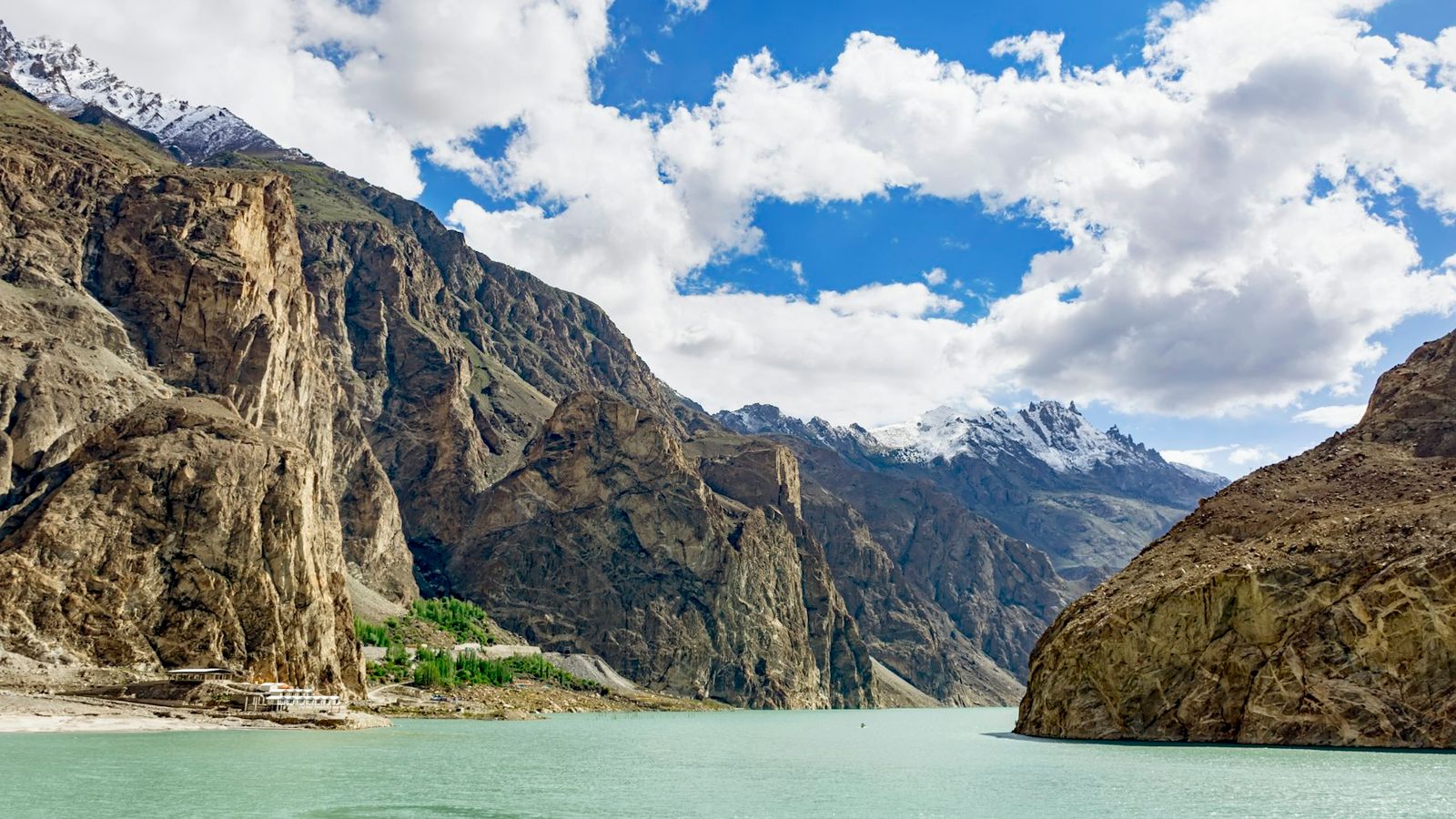
Attabad Lake formed in 2010, when a huge landslide blocked the Hunza River. Today its intensely blue water is one of the most photographed sights in the north. You can take a boat ride or a jet-ski, or simply stop at one of the cafés along the shore and take in the view.
Karimabad, Baltit Fort and Altit Fort
Karimabad is the heart of central Hunza, with guesthouses, cafés and handicraft shops. Above it stands Baltit Fort, the centuries-old home of Hunza's former rulers, now restored as a museum with sweeping views of the valley. A short drive away, the even older Altit Fort sits on a cliff above the river, surrounded by a peaceful royal garden.
Eagle's Nest and the high viewpoints
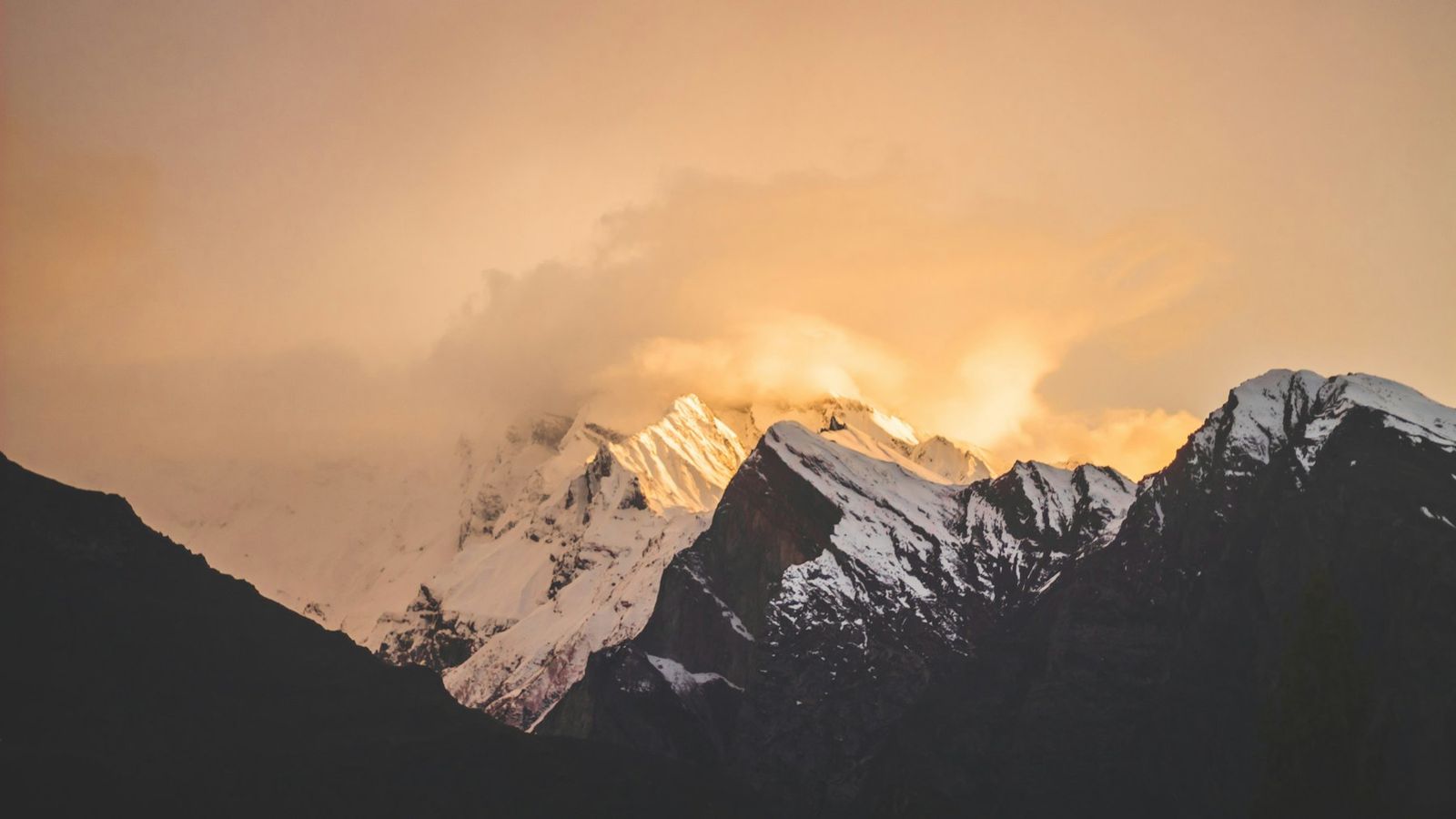
Drive up to the viewpoint at Duikar, known as Eagle's Nest, for sunrise or sunset. On a clear day you can see Rakaposhi, Ultar Sar and the peaks of the Hunza range light up one after another.
Upper Hunza: Passu and Khunjerab
North of Attabad Lake lies Gojal, or Upper Hunza. Here you'll find the jagged Passu Cones, the swaying Hussaini suspension bridge and the Passu Glacier. Further north, the road climbs to Khunjerab Pass on the Chinese border, one of the highest paved border crossings in the world at around 4,700 metres. The pass is usually closed in winter, and at that altitude it's wise to go slowly and keep the visit short.
Tips for your trip
- Carry cash. ATMs exist in Karimabad and Aliabad but can run out or go offline.
- Pack layers. Even in summer, evenings are cool and high passes can be freezing.
- Respect local customs. Dress modestly and ask before photographing people, especially women.
- Watch the altitude. Most of the valley is comfortable, but places like Khunjerab are high enough to cause headaches. Drink water and don't rush.
- Travel with a licensed operator if you're new to the north. Local drivers know the roads and conditions.
Plan your Hunza trip
Hunza is one of the most popular destinations on TourScope. Browse tour companies that run trips to Hunza, compare their ratings and licences, and book directly with the operator.