 Historical places
The Salt Range: Khewra, Katas Raj and Rohtas Fort on the M-2
TourScope team · 19 November 2026 · 6 min read
Photo: Zawar Haider / Unsplash
A salt mine with a mosque made of salt bricks, ancient temples around a sacred pond and Sher Shah Suri's mighty fort. How to see Punjab's Salt Range and Jhelum heritage on a day trip or weekend from Islamabad or Lahore this winter.
Between Islamabad and Lahore, the M-2 motorway climbs through a band of rugged, reddish hills. This is the Salt Range, and hidden in it are some of Punjab's most rewarding sights: a salt mine worked for centuries, an ancient Hindu temple complex around a sacred pond, a Mughal lakeside garden and, near Jhelum, one of the great forts of South Asia. Everything is close enough for a day trip or a relaxed weekend, and winter is the best time to go.
Why go in winter?
The Salt Range bakes in summer, so October to March is the season to visit. Days are mild and sunny, ideal for walking around temples and fort walls. The one catch is fog: in December and January, dense fog can close sections of the M-2 in the early morning. Check our Road news page before you leave, and wait for the fog to lift before you drive. For more cold-season ideas, see our winter travel guide to Pakistan.
Khewra Salt Mine
Khewra is often described as the second-largest salt mine in the world and one of the oldest. Its tunnels run for around 40 km inside the mountain, and it draws about a quarter of a million visitors a year. The mine is run by the Pakistan Mineral Development Corporation (PMDC), which still extracts salt here alongside the visitor area.
Local legend says the salt was discovered when the horses of Alexander the Great's army, passing through around 326 BC, were seen licking the rocks. In 1872 the British developed the main tunnel that visitors walk through today.
Inside, highlights include:
- The mine train, a small narrow-gauge railway from the British era that carries visitors into the tunnels.
- The Badshahi Mosque, a small mosque built from multicoloured salt bricks deep inside the mine.
- The Assembly Hall, a huge chamber said to be around 75 metres high.
- Salt-crystal pools and glowing salt walls.
Getting there: Khewra is roughly 160 km from both Islamabad and Lahore. Leave the M-2 at the Lillah interchange and drive about 30 km towards Pind Dadan Khan. Allow around two and a half to three hours each way from either city, depending on traffic and stops.
What to wear: the temperature inside stays around 18 to 20°C all year. Bring a light layer and wear comfortable shoes with a good grip, as some floors are uneven and can be slippery.
Katas Raj temples
In the hills near Choa Saidan Shah in Chakwal District stands the Katas Raj temple complex: a cluster of Hindu temples and other old buildings around a green, sacred pond. The site is about 20 to 25 km from Kallar Kahar along the road to Choa Saidan Shah.
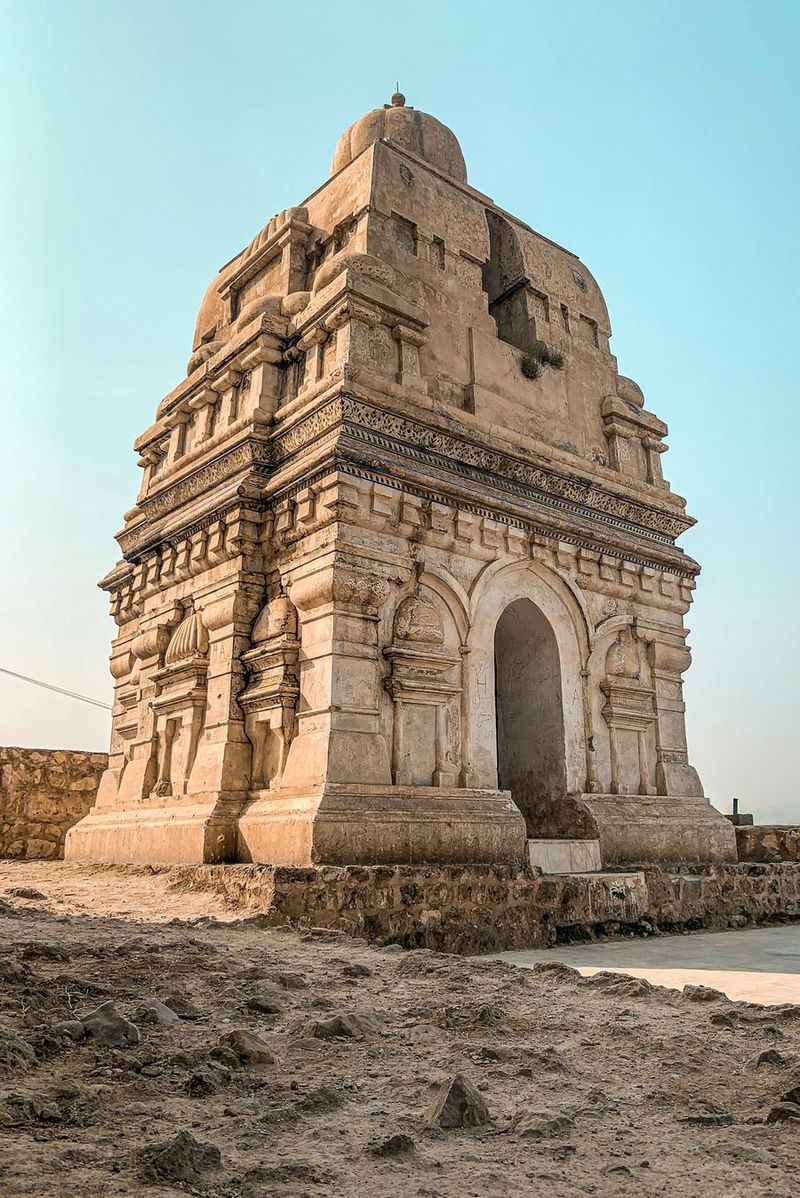
The pond sits at the heart of the legends. Hindu tradition holds that it formed from the tears of Shiva as he grieved for his wife Sati. The site is also linked to the Mahabharata: the Pandava brothers are said to have spent part of their exile here, and this is where Yudhishthira is believed to have answered the riddles of a Yaksha to bring his brothers back to life.
The oldest surviving temple dates from around the 6th century CE, and the main temple was built in about the 10th century under the Hindu Shahi rulers. Before 1947 the site drew large crowds of pilgrims, especially for Maha Shivaratri, and Hindu pilgrims from Pakistan and India still come for the festival.
Restoration began in 2006, with the pond cleaned and several temples repaired. The pond has had serious problems, though. In 2016 it ran dry, and the fall in groundwater was blamed on nearby cement factories. The Supreme Court took up the case and in 2018 ordered the factories to find other water sources. Water levels remain a concern, so the pond may look lower than in older photos.
Kallar Kahar
Just off the M-2, Kallar Kahar makes an easy stop between Khewra and Katas Raj. The town is known for its lake and for its link with the first Mughal emperor, Babur, who passed through in 1519 and praised the place in his memoirs for its beauty and pleasant climate.
Near the lake you can see Takht-e-Babri, a platform carved from the rock from which Babur is said to have addressed his army. Nearby are traces of the garden he laid out, Bagh-e-Safa. The area was once famous for its peacocks, but local reports say their numbers have fallen sharply, so treat any you spot as a bonus rather than a promise.
Rohtas Fort
Near Dina, about 16 km north-west of Jhelum, Rohtas Fort is the jewel of the region. Work began in 1541 under Sher Shah Suri, the Afghan ruler who had driven the Mughal emperor Humayun out of India. The fort was meant to block Humayun's return and to control the local Gakhar tribes, who sided with the Mughals.
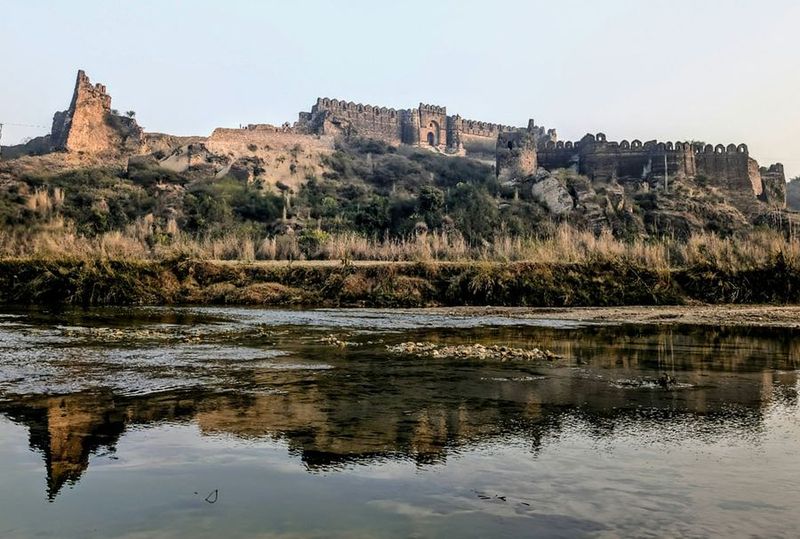
The scale is impressive: around 4 km of massive walls with dozens of bastions, enclosing a huge area of hillside. UNESCO made it a World Heritage Site in 1997, calling it an exceptional example of Muslim military architecture in Central and South Asia.
Look out for the gates, especially the grand Sohail Gate, with some of the finest stonework in the fort, and the Kabuli Gate, which faces towards Kabul and now houses a small museum and visitor centre. Allow at least two hours, and wear sturdy shoes for the stone paths and steps.
If you have more time
- Tilla Jogian: an abandoned complex of Hindu temples near the top of the highest peak in the eastern Salt Range, about 25 km west of Jhelum. It was once a major centre of jogi ascetics, and tradition says Guru Nanak meditated here. There is no proper road to the top; the usual approach is a steep hike of about 3 km from Bhet village, so go with a local guide.
- Nandana Fort: ruins of a hilltop fort near the village of Baghanwala, in Pind Dadan Khan Tehsil. In the 11th century the scholar Al-Biruni used this hill to work out the size of the earth. The site is in poor condition and hard to reach, so plan it with someone who knows the way.
Suggested routes
One day from Islamabad or Lahore
- Option A, Salt Range loop: drive the M-2 to Lillah, visit Khewra in the morning, then cross the hills via Choa Saidan Shah to Katas Raj, and rejoin the motorway at Kallar Kahar after a lakeside stop.
- Option B, Rohtas Fort: from Islamabad, allow roughly two to three hours down the GT Road through Jhelum to Dina. From Lahore, allow three to four hours on the GT Road.
Two-day weekend
- Day 1: Khewra in the morning, Katas Raj in the afternoon, and an overnight stay around Kallar Kahar or Chakwal.
- Day 2: drive to Jhelum for Rohtas Fort, then head home by the GT Road. Drive the narrow hill roads in daylight. Keen walkers can swap in Tilla Jogian.
Food stops
The motorway service areas on the M-2, including the well-known Bhera service area, are reliable for clean washrooms, fuel and quick meals. Kallar Kahar has plenty of roadside eateries near the interchange, and Jhelum and Dina have simple local restaurants along the GT Road.
Photography and respect
- Katas Raj is a living place of worship. Dress modestly, take off your shoes where asked, and do not climb on the temples. Be especially respectful during festivals.
- The mosque inside Khewra is also a place of prayer, so keep your voice down.
- Ask before photographing people, and follow any signs about photography. Drones usually need permission at heritage sites.
- Winter light is soft and golden. Early morning and late afternoon are best for Rohtas Fort's walls and the Katas Raj pond.
Plan your trip
Many tour companies run day trips and weekends to Khewra, Katas Raj and Rohtas Fort, often with transport from Islamabad or Lahore. Use our tour matcher to compare options, or browse companies touring Punjab and cultural tour companies. If you are based in Lahore, pair this trip with our guide to Lahore's Mughal heritage: Badshahi Mosque and Lahore Fort.
Photo credits
Cover: inside the Khewra Salt Mines by Zawar Haider via Unsplash. Katas Raj temple by Mehroz Naqvi via Unsplash. Rohtas Fort by Shahbaz Anjum via Unsplash.