 Scenic places
Deosai Plains: a guide to the 'Land of Giants'
TourScope team · 19 November 2026 · 6 min read
Photo: Shehzy Alam / Unsplash
Wildflowers, brown bears and Sheosar Lake on one of the world's highest plateaus. How to reach Deosai from Skardu or Astore, when it opens, the latest park rules and how to plan a visit next summer.
Deosai is one of those places that looks unreal even in photos. Picture a vast, rolling grassland at more than 4,000 metres, crossed by clear streams, carpeted with wildflowers in summer and ringed by snowy peaks. Local legend calls it the Land of Giants.
The plateau is snowbound and closed now, so this guide is for planning next summer: what Deosai is, how to get in, when it opens, the rules you need to follow and how to fit it into a wider trip.
What is Deosai?
The Deosai Plains lie in Gilgit-Baltistan, between Skardu and Astore, where the western Himalaya meets the Karakoram. The plateau sits at an average height of around 4,100 metres (about 13,500 ft), which makes it one of the highest plateaus in the world.
Deosai was declared a national park in 1993, mainly to protect the Himalayan brown bear, a rare and threatened animal in Pakistan. The Himalayan Wildlife Foundation did much of the early conservation work, and the park is now run by the Gilgit-Baltistan Forest, Parks and Wildlife Department.
The work has paid off. Fewer than 20 bears were counted when the park was created, and a 2022 survey estimated around 66 bears in Deosai and its buffer valleys. That is still a small, fragile population, so how visitors behave really matters.
Wildlife and wildflowers
Brown bears are the stars, but they are not the only residents. Keep an eye out for:
- Himalayan (golden) marmots, which you will almost certainly see standing by their burrows and whistling a warning.
- Himalayan ibex, red fox and the Himalayan wolf. The snow leopard also lives in the wider area, though sightings are very rare.
- Birds of prey, including the golden eagle, lammergeier (bearded vulture), Himalayan griffon and several falcons. More than 120 bird species have been recorded.
- Snow trout in the rivers and lakes.
In July and early August the plains turn into a huge wildflower meadow, with butterflies everywhere.
Sheosar Lake, Bara Pani and Kala Pani
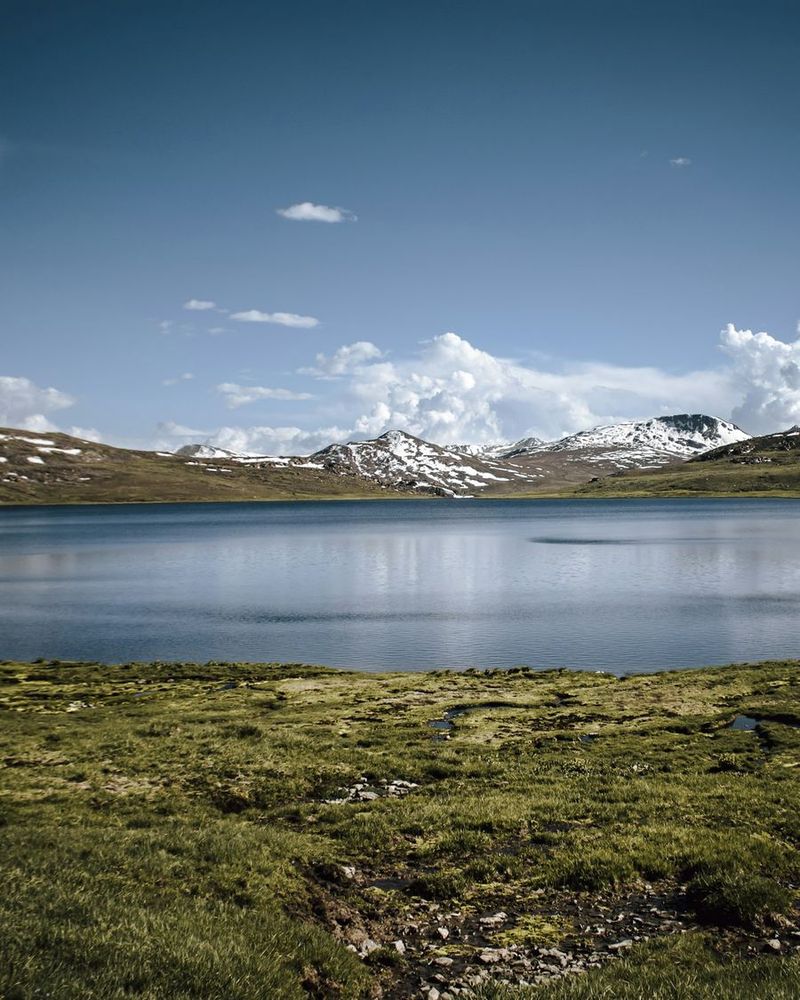
Sheosar Lake sits in the western part of the park, towards the Chilum (Chilim) side, at roughly 4,100 to 4,200 metres. It is a clear, calm lake with snowy ridges behind it and is the most photographed spot in Deosai.
Bara Pani ("big water") is the largest river crossing the plateau and the best-known stop in the middle of the park. Jeeps cross it on a bridge, and it has long been the busiest camping area. Bara Pani is roughly 60 km from Skardu.
Kala Pani ("black water") is a smaller stream on the Skardu side of Bara Pani, usually shallow enough for jeeps to drive through.
Routes into Deosai
From Skardu (via Sadpara and Ali Malik Mar)
This is the shortest and most popular route. The road leaves Skardu, climbs past Sadpara village and Sadpara Lake, then keeps climbing to the Ali Malik Mar pass (just over 4,000 metres) before dropping onto the plateau towards Kala Pani. Allow around 2.5 to 3 hours from Skardu to Bara Pani, longer in early summer when the track is wet and muddy.
From Astore (via Chilum)
From Astore the road runs up to Chilum, the last village before the plains, and then on to Sheosar Lake. Expect around 4 to 5 hours from Astore to Sheosar by jeep.
Crossing the whole plateau
Driving right across Deosai between Chilum and the Skardu side takes around 3 to 4 hours without long stops. Many travellers do a full Skardu to Astore crossing (or the reverse) in one long day, stopping at Bara Pani and Sheosar on the way.
Times depend on snow, rain and the state of the track, so treat them as rough guides. Check our Road news page before you travel.
When is Deosai open?
Deosai is buried under snow for most of the year. The jeep road usually opens in June once the snow clears, and the season runs to around September or early October, when the first heavy snow closes the passes again. In practice the weather decides.
- June: snow patches and boggy ground.
- July to mid-August: the best time for wildflowers, green grass and active wildlife.
- September: quieter and clearer, but nights are very cold.
- October onwards: risky. Snow can arrive suddenly and close the route.
For trips in the colder months elsewhere, see our winter travel guide.
Park entry and camping rules
Visitors pay an entry fee and register at the park checkpost. Rates differ for Pakistanis and foreigners and change over time, so check the current fee with your operator or at the checkpost rather than relying on old blog posts.
The rules have also tightened recently, so check before you plan to stay overnight:
- After a brown bear attack on a camper in September 2025, authorities banned camping in the area for the rest of that season.
- In December 2025, the Gilgit-Baltistan government banned seasonal hotels and other commercial activities inside the park to protect the fragile ecosystem, warning of legal action against violators.
We could not confirm exactly what camping rules will apply next summer. Plan Deosai as a day trip or a crossing, with nights in Skardu, Astore or Chilum, unless the park authorities confirm that overnight camping is allowed.
Altitude and weather
- Altitude: you will be above 4,000 metres all day. Spend at least a night or two in Skardu or Astore first, drink plenty of water and go down if symptoms get worse.
- Cold: even in July, nights can drop below freezing and mornings are icy. Bring a warm jacket, hat and gloves.
- Storms: the weather changes fast. Sunny mornings can turn into hail, rain or lightning by the afternoon, and there is almost no shelter on the open plain.
- No services: expect no mobile signal across most of the plateau, no fuel and no ATMs. Carry what you need from Skardu or Astore.
Bears: stay safe, keep them wild
Recent reports say tourist rubbish is drawing bears towards camps and roads, and plastic has been found in bear droppings.
- Never feed bears, and never leave food or scraps lying around.
- Keep your distance. Use a zoom lens and stay in or near your vehicle if a bear is close.
- Do not walk off alone, especially early in the morning or at dusk.
- Follow your driver's and the rangers' advice. They know where bears have been seen.
Leave no trace
Deosai's ecosystem is easily damaged. Carry all rubbish back out with you, including food waste and plastic. Drive only on the existing track, as tyre marks on the grassland take years to heal. Do not pick flowers or wash with soap in the streams.
Why hire a jeep and a local driver
An ordinary car is not suitable for Deosai. The track is rough, crosses streams and turns to mud after rain or snowmelt. A 4x4 jeep with an experienced local driver is the safe and normal way to go. Drivers know the crossings, the weather and the current rules.
A licensed local tour operator can fold the crossing into a longer trip and plan your nights around the camping rules. If you are visiting Pakistan for the first time, read our guide for foreign visitors.
Combining Deosai with Skardu, Astore and Rama Meadows
- Skardu: use it as your base for Shangrila, Shigar, Khaplu and the cold desert. See our Skardu and Baltistan travel guide.
- Astore and Rama Meadows: on the Astore side, Rama Meadows offer pine forest, meadows and views towards Nanga Parbat, an easy add-on before or after the crossing.
- Fairy Meadows: if you are heading back to the Karakoram Highway, you can link up with the Fairy Meadows and Nanga Parbat trek.
A popular loop is to fly or drive to Skardu, spend a few days there, cross Deosai to Astore, visit Rama, and return to the Karakoram Highway. Keep a spare day for weather.
Plan your trip
Many tour companies on TourScope include Deosai in their Skardu and Astore itineraries. Use our tour matcher to compare trips for next summer, or browse companies touring Skardu. Before you book, ask each operator how they handle the current camping rules and where you will sleep.
Photo credits
Cover: Deosai National Park by Shehzy Alam via Unsplash. Sheosar Lake by Najmul Hasan via Unsplash.